Black streaks on roof shingles are almost always roof algae, a blue-green species called Gloeocapsa magma, not soot, mold or rot. The streaks are a cosmetic problem first. They darken the roof, and they can be cleaned gently or prevented on the next roof with algae-resistant shingles.
This guide covers what causes the stains, how to tell algae from moss, how to clean it safely, and what warranties and insurance do and do not cover.
What causes black streaks on roof shingles?
Airborne algae. The Asphalt Roofing Manufacturers Association (ARMA) says the discoloration is caused by algae, not fungus, and that the main species is Gloeocapsa magma. The algae are “contained in and transported through the air,” so they settle on any roof.
The dark color is the algae’s own pigment. ARMA’s technical bulletin says the stain “usually has a brown to black appearance” and is most visible on light-colored roofs. It can look uniform or streaked, and it is often mistaken for soot, dirt, moss or tree droppings.
ARMA lists the Midwest among the regions where growth is especially common, along with the Gulf states and both coasts. Growth is worst in warm, humid conditions. Wichita’s normal July high is 92.6 F, and May brings 5.17 inches of rain on average, according to the National Weather Service in Wichita.
Is the stain algae, moss or lichen?
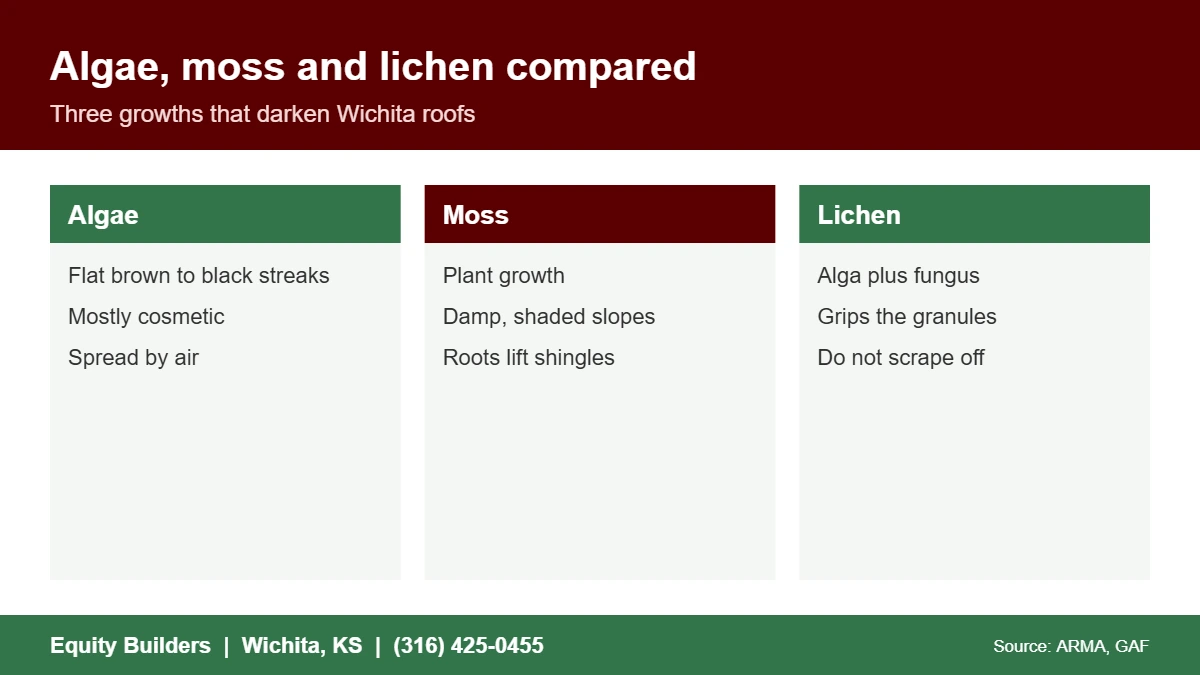
Look at the shape and where it sits. GAF’s roofing blog describes algae as a cause of dark stains on moist areas of a roof, usually where water drips from above. InspectAPedia explains that lichen is a partnership of an alga and a fungus, and unlike moss it needs sunlight and tolerates long dry spells.
| Growth | Looks like | Harm to shingles |
|---|---|---|
| Algae | Brown to black stains or streaks on moist areas | Mainly cosmetic, per ARMA and Green Building Advisor |
| Moss | A plant growth that thrives in damp, shaded areas | Roots can lift shingles and hold moisture, per GAF |
| Lichen | Patches that grip the granules, even in sun and dry spells | Can pull granules loose; less damaging than moss, per InspectAPedia |
Moss is the one to treat quickly. GAF says its roots grow between shingles and can push them apart as temperatures drop, which lets water in. Avoid pressure washers and weed killers not made for moss, because they can stain or damage the roof. A few black streaks on roof slopes from algae do not push shingles apart.
Lichen grips tightly. InspectAPedia warns that pulling it off can take granules with it, so do not scrape it by hand.
Are black streaks on roof shingles harmful?
Usually not to the roof itself. Green Building Advisor reports that an industry expert said, “If you can live with the black streaks, it won’t hurt the shingles.” The same article notes that researchers have not studied whether algae shortens shingle life.
The real costs are appearance and heat. ARMA’s bulletin only addresses looks. A dark, stained roof can lower curb appeal if you plan to sell, and heavy black streaks on roof slopes can hide worn shingles, so see our notes on repair vs replacement before you spend on a cleaning.
Do not assume every dark patch is algae. Bare spots where granules have worn off look dark too. Compare them using our guide to hail damage vs roof wear.
How do you clean black streaks off a roof?
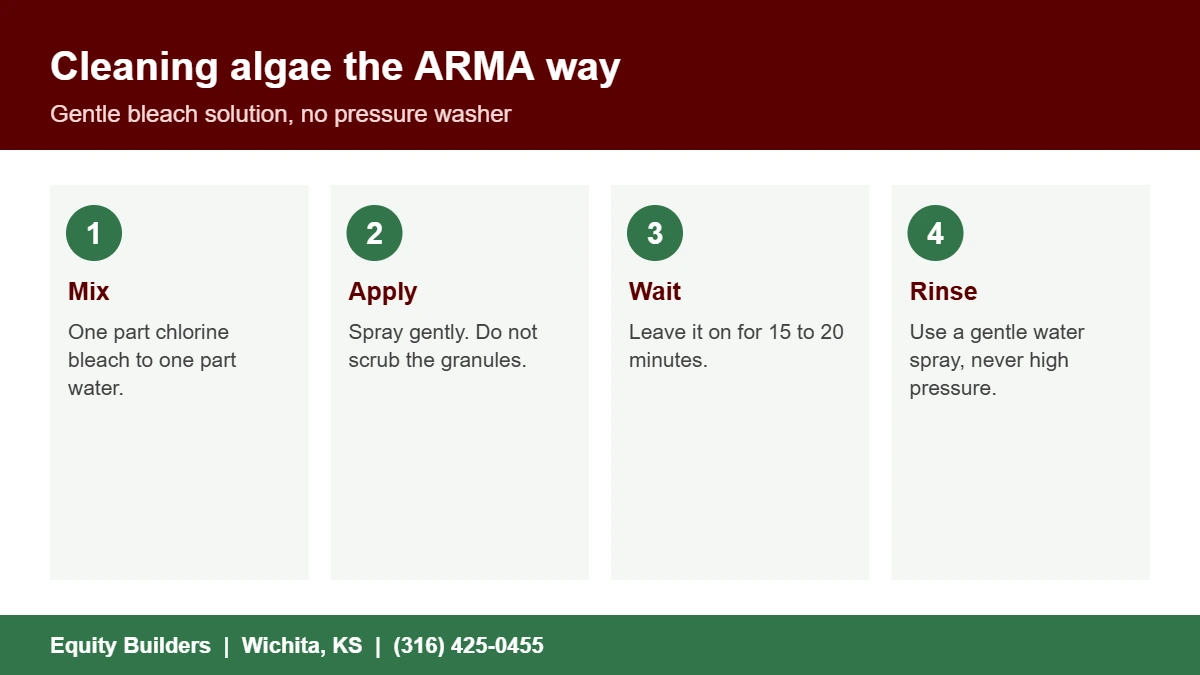
Gently, with a diluted bleach solution, and never with a pressure washer. ARMA gives these directions:
- Mix. A typical solution is one part liquid household chlorine bleach to one part water. Directions from shingle makers vary.
- Apply gently. Do not scrub. Scrubbing can loosen and remove granules.
- Wait. Leave the solution on for 15 to 20 minutes.
- Rinse. Use a gentle water spray.
ARMA says high-pressure washing “should not be used” to remove algae because it is likely to damage asphalt roofing. A second ARMA reference gives a stronger mix of one cup TSP, one gallon of bleach and five gallons of water. It warns that a wet roof is slippery and that cleaning is temporary, so the stains will likely return.
Protect landscaping, use a ladder or walkboards, and handle bleach with normal care. On a steep or two-story roof, hire a roofer rather than climbing up yourself. The roof repair crew can also check for loose shingles while the surface is clean.
Do algae-resistant shingles stop black streaks on roof surfaces?
They slow them down. ARMA says algae-resistant products are designed to inhibit growth for extended periods, and that most manufacturers offer copper-containing shingles. Many use granules with a copper layer that releases copper when wet.
The warranties are limited and specific:
- GAF. The StainGuard Plus sell sheet lists a 25-year limited warranty against blue-green algae discoloration. The 30-year StainGuard Plus PRO warranty applies only to Timberline UHDZ shingles.
- Owens Corning. Roofing Magazine reported in January 2023 that StreakGuard coverage rose from 10 years to 25 years on most laminate lines.
GAF contrasts its capsules with older copper-coated granules, which release less copper as they age. Both warranties apply only to products sold in packages with the algae-protection logo, and they cover blue-green algae only. Read the full shingle warranty for limits. Our page on asphalt shingles in Wichita covers the product choices.
Do zinc or copper strips prevent roof algae?
They can help. GAF says a zinc strip installed near the ridge oxidizes over time, and rain running over the roof creates conditions that moss does not tolerate. Green Building Advisor names metal ridge flashing as “The best remedy.”
The strip only protects the shingles below it, so a long slope may need more than one. Neither source gives a spacing rule, so follow the strip maker’s instructions. InspectAPedia adds that metal salts washing down the roof can also inhibit lichen below the strip. Trimming overhanging trees and clearing gutters also cut the damp, shaded conditions that growth prefers. See gutters in Wichita for drainage options.
Does home insurance cover black streaks on roof shingles?
Generally no. PropertyCasualty360 describes dark streaks, moss and lichen as “a maintenance issue, which is excluded.” NerdWallet says a policy “likely won’t pay for a leak caused by neglect, age, or normal wear and tear.”
Wording differs by policy, and algae can fall under a fungus exclusion in some. Check yours. If hail or wind also damaged the roof, that is a separate matter, covered in hail damage roof repair in Wichita.
Black streaks on roof questions from Wichita homeowners
Can I pressure wash black streaks off my roof?
No. ARMA says high-pressure washing is likely to damage asphalt roofing and should not be used for algae or any other purpose. It also loosens granules. Use a gentle bleach solution and a low-pressure rinse, or hire a roofer who cleans asphalt shingles.
Will the streaks come back after cleaning?
Yes, likely. ARMA calls cleaning a temporary fix and says the discoloration will probably return. Algae spores travel by air. Algae-resistant shingles or a zinc strip at the ridge are the longer-term answers.
Do black streaks mean my roof needs replacing?
Not by themselves. The stain is mostly cosmetic. Replace a roof for leaks, curling, bare spots or age, not for color. If streaks sit beside missing granules or soft spots, have a roofer inspect it.
Get your roof checked in Wichita
Equity Builders has served Wichita since 1985 and offers a lifetime workmanship warranty, with crews certified by GAF, Owens Corning and CertainTeed. If stains hide wear, we can inspect the roof and quote a repair or new shingles. Call (316) 425-0455 or request a free estimate.
Sources
- Asphalt Roofing Manufacturers Association, Algae Discoloration of Roofs (technical bulletin, via IIBEC)
- GAF, StainGuard Plus algae protection sell sheet, and GAF blog on moss
- Roofing Magazine, Owens Corning Expands Algae Resistance Warranty Coverage, January 10, 2023
- Green Building Advisor, Preventing Roof Algae, and InspectAPedia, Roof Lichens Damage
- PropertyCasualty360, Insurance questions grow alongside mold, fungi and algae, June 2018, and NerdWallet, Does Homeowners Insurance Cover Roof Leaks?
- National Weather Service Wichita, climate normals 1991 to 2020
Last updated October 24, 2026. Warranty terms change, so read the current shingle warranty and your policy before relying on either.