Soffit and fascia repair is usually needed for one of three reasons in Wichita: wind tore panels loose, water rotted the wood behind the gutters, or animals found a way into the attic. Small damage can be patched. Rot that has reached the rafter tails, or soffit that keeps blowing out after storms, calls for replacing the full run with new trim, vents and flashing.
Here is how to tell the parts apart, read the damage, and plan the repair.
What are soffit and fascia?
Both are part of the roof edge, called the eaves.
- Fascia is the vertical board at the end of the rafters. Gutters hang on it, and the roof’s drip edge laps over its top.
- Soffit is the horizontal panel under the overhang, between the fascia and the house wall. The Internet Center for Wildlife Damage Management notes that soffits “usually have vents of various shapes and sizes.”
Those vents are part of the attic’s air system. Air enters at the soffit and leaves near the ridge. Building Science Corporation describes a vented roof as one that removes heat by “ventilating the underside of the roof deck with exterior air.” Block the soffit and the system stops working. Our guide to roof ventilation in Wichita explains the full setup.
What damages soffit and fascia in Wichita?
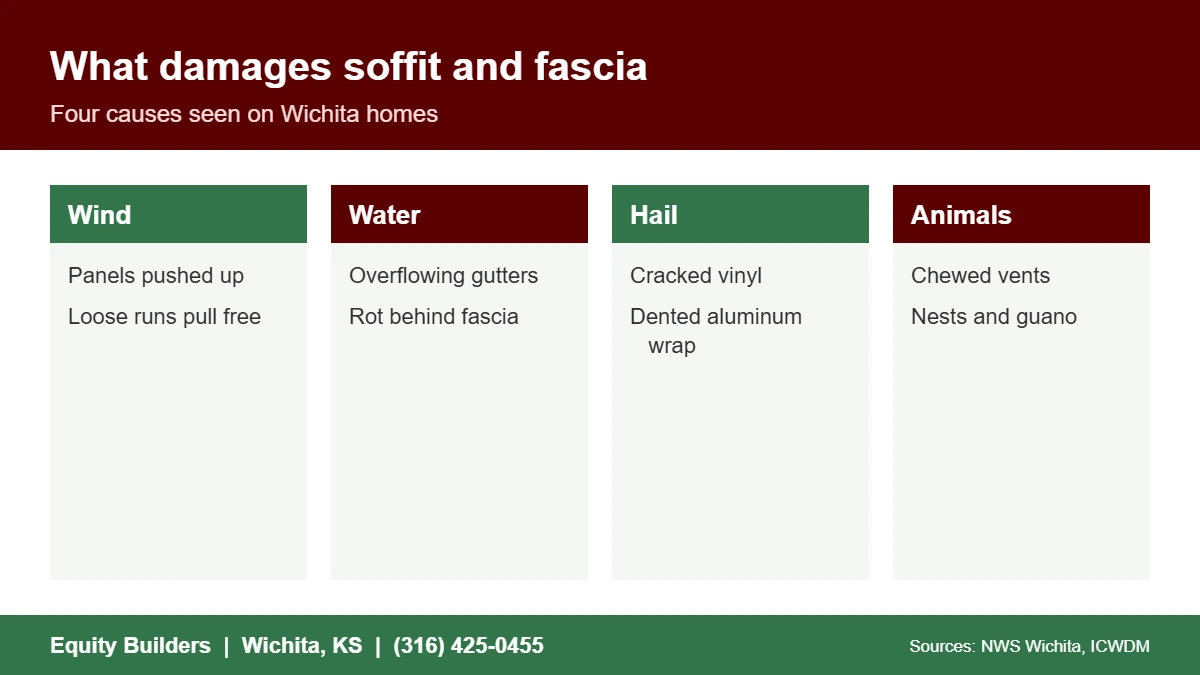
Wind
Wind gets under the overhang and pushes up. Loose soffit panels flap, then pull free. The National Weather Service recorded a 102 mph gust at Wichita’s Eisenhower National Airport on June 17, 2025, the highest on record there. On September 3, 2025 the weather service estimated a 75 mph gust near Maize, where paneling blew off a gas station roof.
Water and rot
Most fascia rot starts behind the gutter. Overflowing gutters soak the board, and missing or short drip edge lets water run down the back of the fascia. Wood that stays wet softens and grows mildew. Check for:
- Paint peeling in strips along the fascia
- Soft spots you can press with a screwdriver
- Gutters pulling away or sagging between hangers
- Dark stains on the soffit below a valley or downspout
Clogged gutters are the usual source. See how clogged gutters cause roof damage and our guide to roof flashing.
Hail
Hail cracks vinyl soffit, dents aluminum fascia wrap and chips paint on wood trim. After a storm, the eaves are easy to check from the ground. Look at the west and north sides first, then every side.
Animals
Squirrels, birds and bats use gaps in the soffit to reach the attic. Signs include chewed vent openings, nesting debris and staining. For bats, the wildlife center lists clues such as “rub marks, guano, and sometimes odor.”
Why does drip edge matter for the fascia?
Drip edge is the metal angle at the roof edge that sends water into the gutter instead of down the face of the fascia. The 2018 International Residential Code, which Wichita enforces, states that “A drip edge shall be provided at eaves and rake edges of shingle roofs.” The National Roofing Contractors Association recommends drip edge “at all eaves and rakes for asphalt shingle roof systems.” Many older roofs were built before the code required it. If your fascia keeps rotting behind the gutter, missing drip edge is a likely reason.
How to check your eaves from the ground
- Walk the house on a dry day and look up along every eave.
- Look for sagging soffit panels, gaps at the wall and missing vent covers.
- Check the fascia paint behind each gutter and at the corners.
- Watch the gutters during a hard rain. Water spilling over the back edge points to pitch or drip edge problems.
- Photograph anything loose, with the date.
When should you repair and when should you replace?
| What you see | Usual fix |
|---|---|
| A few loose or cracked soffit panels | Reset or replace those panels and secure the channels |
| Fascia wrap dented by hail, wood underneath dry | Replace the wrap on the damaged runs |
| Soft fascia behind one gutter section | Cut out and replace that fascia board, rehang the gutter |
| Rot along most of one side, or into rafter tails | Replace the fascia run and repair rafter ends |
| Soffit that keeps blowing out after storms | Replace the run with new channels, fasteners and vented panels |
| Animal entry points | Exclusion first, then repair and screen the openings |
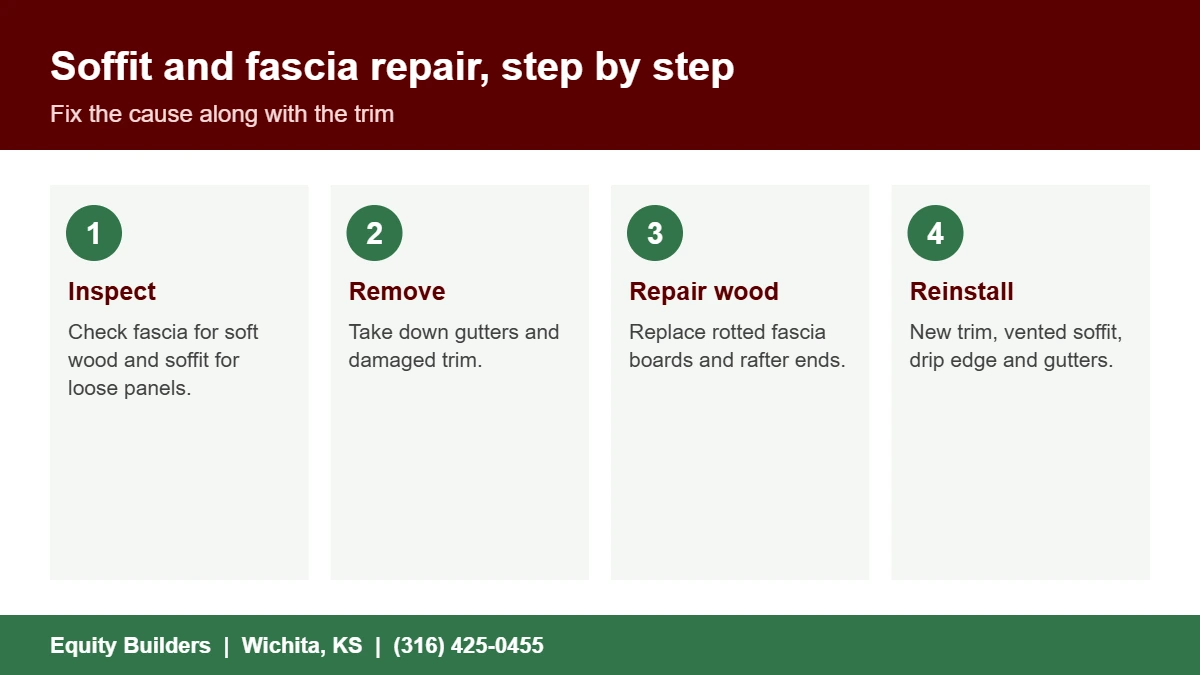
Soffit and fascia repair is a good time to fix the cause as well. Correct gutter pitch, add missing drip edge and clear blocked vents while the eaves are open.
Can you replace soffit without replacing fascia?
Yes. They are separate parts. If the fascia is solid and only the soffit panels are damaged, the soffit can be replaced alone. The reverse is also true. The catch is rot. Water that rotted the fascia often reached the sub-fascia and rafter tails too, and those have to be repaired before new trim goes on.
Which materials work best?
- Aluminum. Common for soffit panels and fascia wrap. It does not rot, but hail can dent it.
- Vinyl. Common for soffit. Lightweight and paint-free, and it can crack on impact.
- Wood. Original on many older Wichita houses. It needs paint and stays sound only while it stays dry.
- Fiber cement. Used for trim and soffit on some newer homes. It needs paint and careful installation.
Match vented panels to the attic’s ventilation needs. Solid panels in the wrong places cut off intake air.
What about bats in the soffit?
Timing matters. The wildlife center advises that bat exclusion “generally should not be attempted between May 15 and August 15,” when young bats cannot fly yet, and that winter hibernation should also be avoided. It recommends one-way doors left in place for at least three to five days. Some bat species are federally protected, so contact the Kansas Department of Wildlife and Parks or a licensed wildlife control operator before sealing an active roost. Schedule soffit and fascia repair after the bats are out.
Do I need a permit in Wichita?
Small jobs usually do not. The Wichita and Sedgwick County building code exempts repair or replacement of roofing and siding materials up to 400 square feet within a 12 month period. Larger exterior work goes through MABCD, where siding permit fees are based on the project’s value. Ask MABCD at 316-660-1840 how your project is classified. See our Wichita roof permit guide.
Does insurance pay for soffit and fascia repair?
Sudden wind or hail damage is usually part of the same claim as the roof and siding. Rot from long-term leaks is maintenance. Photograph the eaves after any storm. See what to do after a hailstorm and how ACV and RCV pay.
Soffit and fascia repair questions
How much does soffit and fascia repair cost?
It depends on the length of damaged eave, the material, the height and whether rafter tails are rotted. A walk-around and a look behind the gutters is the only way to price it.
Who do you call for soffit and fascia repair?
A roofing or exterior contractor. The work ties into the gutters, drip edge and attic vents, so one crew should handle all of them.
Can wind damage soffits?
Yes. Wind pushes up under the overhang. Loose panels are usually the first to go.
Can gutters be rehung on rotted fascia?
Not reliably. Hangers need solid wood. Replace the rotted section first.
Get your eaves inspected
Equity Builders handles soffit and fascia repair along with roofing, gutters and siding from 442 S. Ellis St. in Wichita, where we have worked since 1985. See our gutter and siding services and storm damage repair, then call (316) 425-0455 or request a free estimate.
Sources
- Internet Center for Wildlife Damage Management, Bat Damage Prevention and Control Methods
- Building Science Corporation, BSI-046 Dam Ice Dam, 2011
- National Weather Service Wichita, top wind gusts and September 3, 2025 storm summary
- Wichita/Sedgwick County Unified Building and Trade Code, current through January 27, 2025
Last updated October 14, 2026. Contact wildlife authorities before disturbing bats.