Roofing contractor fraud is one of the most common home improvement scams targeting Wichita homeowners, particularly after hailstorms and severe weather events. Knowing how to avoid roofing contractor scams before you sign anything protects both your property and your insurance claim. Wichita sits in a region that sees frequent storm activity, which draws opportunistic contractors from out of state who disappear after collecting payment. The good news: a handful of concrete vetting steps separates a legitimate roofer from a fraud, and this guide walks you through every one of them.
What are common roofing contractor scams and red flags to spot?
Roofing fraud follows predictable patterns, and recognizing those patterns early is your strongest defense. The industry term for the most common post-storm scheme is “storm chasing,” where contractors travel to storm-affected areas, knock on doors within days of a weather event, and pressure homeowners into signing contracts before a proper assessment is complete.
Watch for these roofing contractor red flags:
- Door-to-door solicitation immediately after a storm. Legitimate local contractors are busy with existing clients after a major weather event. A stranger showing up the next morning with a clipboard is almost always a storm chaser.
- Demands for large upfront deposits. Deposits over 30% are a major warning sign indicating potential cash flow problems or outright scam intent. Standard practice puts the deposit at 10 to 30 percent, with final payment held until the project passes inspection.
- No written contract or a vague one. Any contractor who resists putting scope, materials, timeline, and payment terms in writing is not a contractor you want on your roof.
- Offers to waive your insurance deductible. Deductible absorption is insurance fraud in most jurisdictions, including Kansas. Accepting this offer can result in claim denial or policy cancellation.
- Refusal to show license, insurance certificate, or references. A legitimate contractor hands these over without hesitation.
- Pressure to sign immediately. High-pressure tactics to sign letters of intent or blank contracts to “lock pricing” are a textbook scam signal.
Pro Tip: Under FTC consumer protection guidelines, you have a 3-day right to cancel any home improvement contract signed at your home. Never let a contractor tell you the deal expires tonight.
Understanding these signs of a dishonest roofer before anyone knocks on your door means you will not be caught off guard when the pressure starts.
How do you verify roofing contractor credentials in Wichita?
Verifying a contractor’s credentials takes less than an hour and can save you thousands of dollars. Follow these steps in order before you authorize any work:
- Check the Kansas contractor license. Kansas requires roofing contractors to carry a valid state license. Contact the Kansas Department of Labor or the Wichita city licensing office to confirm the license number is active and in good standing.
- Call the insurer directly to verify coverage. Certificates can be falsified; call the insurance company listed on the certificate and confirm the policy is active, covers general liability, and includes workers’ compensation. A contractor without workers’ comp leaves you liable if a crew member is injured on your property.
- Research online reviews and BBB ratings. Check the Better Business Bureau, Google Reviews, and Angi for the company’s Wichita reputation. Look for patterns in negative reviews, not just the star rating.
- Confirm a permanent local address. Local presence and reputation are critical safeguards. A contractor without a verifiable Wichita address poses elevated risk because there is no accountability once the job is done.
- Get at least three written, itemized bids. Three bids is the industry standard for identifying outliers and confirming fair pricing. A bid that comes in 40 percent below the others is not a bargain. It signals either missing scope or a contractor planning to cut corners.
Here is a quick reference for what to verify and how:
| What to verify | How to verify it |
|---|---|
| State contractor license | Kansas Department of Labor or Wichita city licensing office |
| General liability insurance | Call the insurer directly using the policy number on the certificate |
| Workers’ compensation coverage | Same direct call to the insurer |
| Business reputation | BBB, Google Reviews, Angi |
| Physical business address | Google Maps, Secretary of State business registry |
Pro Tip: Ask the contractor for the names of three recent Wichita clients and call them. Ask specifically whether the crew cleaned up daily, whether the final bill matched the estimate, and whether they would hire the contractor again.

For a deeper look at what separates trustworthy roofers from the rest, the roofing company reliability guide from Roofwichita covers local-specific criteria worth reviewing.
What should a roofing contract include to protect you?
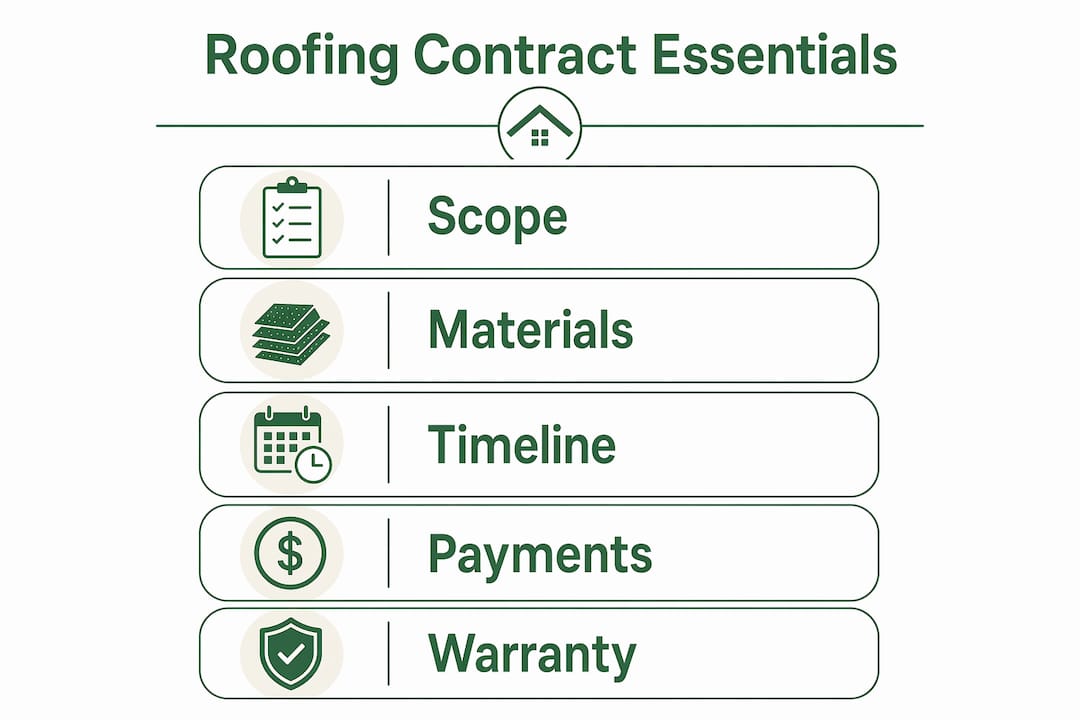
A roofing contract is your legal protection if anything goes wrong. A thorough contract is not a formality. It is the document that determines whether you have recourse when materials are wrong, timelines slip, or workmanship fails.
Every legitimate roofing contract should include:
- Detailed scope of work. This means specific shingle brand and model, underlayment type, flashing materials, whether a full tear-off or overlay is planned, and disposal of old materials. Vague language like “repair roof as needed” is unacceptable.
- Payment schedule with clear milestones. A reasonable deposit of 10 to 30 percent upfront, a progress payment at a defined midpoint, and final payment only after satisfactory completion and inspection. Never pay in full before the job is done.
- Permit responsibility. The contract must state who pulls the permit. Legitimate roofers pull necessary permits, and the permit should list you as the property owner. Contractors who avoid permits are often unlicensed or planning substandard work that would fail inspection.
- Warranty terms. Two separate warranties matter here: the manufacturer’s warranty on materials (typically 25 to 50 years for quality shingles) and the contractor’s workmanship warranty (a minimum of two years is standard for reputable firms).
- Change order protocol. Any deviation from the original scope must be documented in a signed written change order before the work begins. Verbal approvals are not enforceable.
| Contract element | What to look for |
|---|---|
| Scope of work | Specific materials, brands, and methods listed |
| Payment schedule | Deposit under 30%, final payment after inspection |
| Permit responsibility | Contractor pulls permit; homeowner listed as holder |
| Warranty | Both manufacturer and workmanship warranties stated |
| Change orders | Written and signed before any scope changes begin |
Understanding roof repair versus replacement options also helps you evaluate whether what a contractor proposes in the contract actually matches your roof’s condition.
How should you handle post-storm repair offers and insurance claims?
After a hailstorm or severe weather event in Wichita, the pressure to act fast is real. But the decisions you make in the first 48 hours after a storm are the ones most likely to cost you money if you rush them.
Follow these steps when a contractor approaches you after storm damage:
- Do not sign anything on the spot. Legitimate contractors do not pressure homeowners for immediate decisions. Any contractor who says the offer expires tonight or that prices go up tomorrow is using a scam tactic.
- Contact your insurance company first. Call your insurer before authorizing any repairs. Your policy may require you to use approved contractors or follow a specific claims process. Skipping this step can jeopardize your claim.
- Manage your own insurance claim. Contractors cannot legally act as public adjusters or handle insurance claims on your behalf. If a contractor offers to “deal with your insurance for you,” that is a red flag, not a convenience.
- Confirm permit requirements with the city. Call the Wichita city building department to confirm whether a permit is required for your repair. Work done without a required permit can complicate future insurance claims and home sales.
- Never accept a deductible waiver. If a contractor offers to cover your deductible, walk away. This constitutes insurance fraud and puts you at legal risk alongside the contractor.
Pro Tip: Document everything from the moment a contractor contacts you. Save texts, emails, and any written materials they leave behind. This record protects you if a dispute arises later.
For a step-by-step walkthrough of the claims process, the roof insurance claim guide from Roofwichita explains exactly what Wichita homeowners should do before, during, and after filing.
Key takeaways
Protecting yourself from roofing fraud requires verifying licenses and insurance directly, getting three itemized bids, and never signing a contract without complete scope and payment terms in writing.
| Point | Details |
|---|---|
| Verify credentials directly | Call insurers by phone to confirm active coverage; do not rely on certificates alone. |
| Limit upfront deposits | Pay no more than 30% upfront and withhold final payment until the job passes inspection. |
| Demand a complete contract | Require specific materials, a payment schedule, permit responsibility, and warranty terms in writing. |
| Manage your own claim | Never let a contractor handle your insurance claim; doing so may constitute fraud. |
| Prioritize local contractors | Choose a Wichita-based company with a verifiable address, BBB rating, and local references. |
What I’ve learned about roofing scams after years in Wichita
The most expensive mistake Wichita homeowners make is not the one they make during a scam. It is the one they make right before it, when they decide that vetting a contractor is too much trouble after a stressful storm. I have seen homeowners hand over thousands of dollars to contractors who were gone before the first rain revealed the leaks.
My strongest recommendation is to treat any door-to-door post-storm contractor as unqualified until proven otherwise. That is not cynicism. It is the correct default given how frequently storm chasers target Wichita after hail events. A contractor with a real local reputation does not need to knock on your door the morning after a storm.
One detail most homeowners miss: request lien waivers from both the contractor and any subcontractors at final payment. Without a lien waiver, a subcontractor who was not paid by your contractor can place a legal claim against your property even after you have paid in full. This is not a theoretical risk. It happens.
Document every conversation, keep copies of every document, and vet your contractor thoroughly before a single shingle is touched. The time you invest upfront is far less than the time and money you will spend fixing a scam after the fact.
— Virtual
Work with a Wichita roofer you can actually trust
Roofwichita, operated by Equity Builders Roofing, is a licensed, insured, and locally established roofing contractor serving Wichita and surrounding communities. Every project comes with a written contract that specifies materials, a fair payment schedule, and clear warranty terms. The team handles storm damage repair, hail damage restoration, roof replacement, and insurance claim guidance, all without pressure tactics or deductible schemes. If you need a legitimate estimate from a contractor with a verified Wichita presence, contact Roofwichita for professional roof installation or storm damage repair you can count on.
FAQ
What are the biggest roofing contractor red flags?
The most serious red flags are demands for deposits over 30%, offers to waive your insurance deductible, refusal to provide a license or insurance certificate, and high-pressure tactics to sign immediately. Any one of these signals a contractor you should not hire.
How do I verify a roofing contractor’s license in Kansas?
Contact the Kansas Department of Labor or the Wichita city licensing office with the contractor’s name and license number to confirm the license is active and in good standing. Never rely solely on what the contractor tells you verbally.
Can a roofing contractor handle my insurance claim for me?
No. Contractors cannot legally act as public adjusters or manage insurance claims on behalf of homeowners. You must file and manage your own claim; a contractor who offers to do this for you is a significant red flag.
How many bids should I get before hiring a roofer?
Get at least three written, itemized bids. Three bids is the industry standard for identifying fair pricing and confirming that the proposed scope of work is complete. A bid significantly lower than the others usually signals missing scope or substandard materials.
What is a lien waiver and why does it matter?
A lien waiver is a document signed by the contractor and subcontractors confirming they have been paid in full and waive any right to place a lien on your property. Without lien waivers at final payment, subcontractors can file legal claims against your home even after you have paid the general contractor.
Recommended
- How to Choose a Roofing Contractor in Wichita KS | Expert Tips
- Why Choose a Local Roofing Contractor in Wichita
- Top Roofing Questions Homeowners Ask in Wichita | Expert Answers
- #1 Quality Roof Installation in Wichita, Kansas